
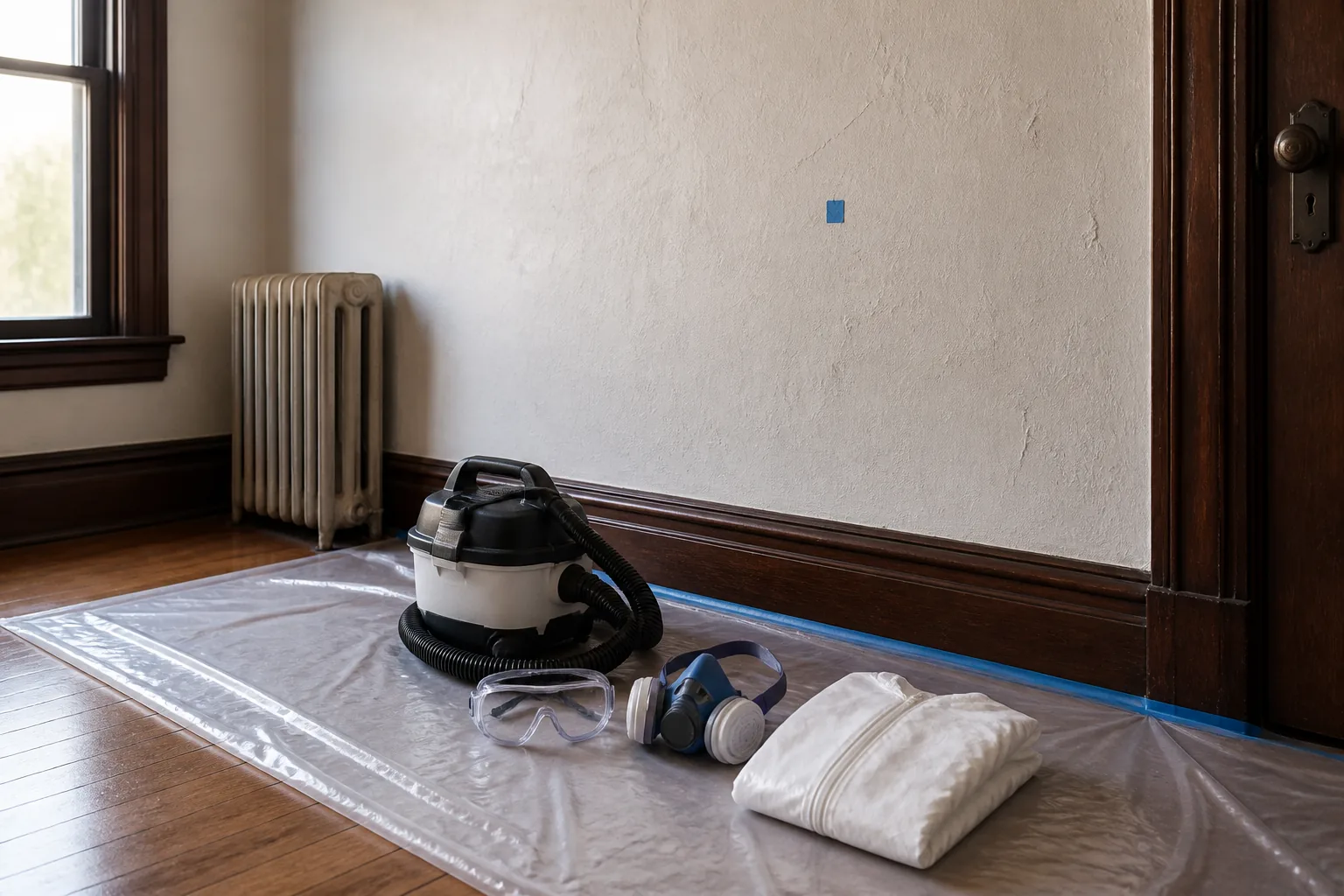
Why 1978 changes the planning conversation
Lead-based paint was banned for consumer residential use in 1978, but it remains in many older homes. The EPA warns that drilling, sanding, cutting and other renovation activities can create hazardous lead dust. Multiple layers can leave old paint beneath a newer finish.
Building age does not prove that a particular surface contains lead, and a clean topcoat does not prove that it is absent. Determine the construction date and renovation history, then follow EPA guidance for testing, professional evaluation or lead-safe assumptions.
- Confirm home and addition dates
- Identify the exact painted surface
- Review prior lead disclosures or tests
- Keep children and pregnant people away from dust
- Use a certified professional when appropriate
Identify the wall assembly without unnecessary disturbance
Older homes may contain wood-lath plaster, gypsum lath, metal lath, early wallboard, masonry or later drywall repairs. Start with exposed edges in unfinished areas and existing records. Tap tests and home age are supporting clues, not a diagnosis.
Different wall sections may have been remodeled at different times. A mounting plan that crosses several points should verify each location. Metal lath, thick plaster and layered repairs can also interfere with stud finders.
- Inspect existing exposed edges
- Compare several non-destructive clues
- Expect room-to-room variation
- Do not create exploratory holes casually
Control dust before drilling
Follow current EPA DIY lead-safe guidance, which addresses determining whether lead is present, setting up the work area, protecting occupants, minimizing dust, cleaning and waste. Keep unauthorized people out of the work area and protect nearby surfaces.
Use tools, containment and cleanup methods appropriate to the hazard and task. A household vacuum without appropriate filtration can redistribute fine dust. Do not dry sweep hazardous dust or track debris through the home.
- Contain the immediate work area
- Use appropriate personal protection
- Minimize dust generation
- Collect debris at the source
- Clean and verify the area before reopening it
Map electrical and plumbing risk
Old wiring may follow layouts that differ from modern expectations, and later renovations can add hidden splices, cables or pipes. Review both sides of the wall and nearby fixtures. De-energizing a circuit reduces electrical hazard but does not identify every conductor or protect plumbing.
Limit drilling depth and stop at metal, a void or unexpected resistance. A protective plate should never be defeated. If the wall contains knob-and-tube wiring, fragile insulation or unclear electrical work, use a qualified electrician before mounting.
- Check outlets, switches and panels
- Check kitchens, baths and radiators
- Use more than one locating method
- Stop at unexpected resistance
- Escalate uncertain electrical conditions
Choose whether the project should proceed
A small decorative item may be relocated to a lower-risk surface or supported by a product that does not require drilling and is explicitly compatible with the finish. Heavy, moving or safety-related objects may justify opening and restoring the wall with proper backing under controlled conditions.
Tenants, landlords and contractors have additional responsibilities that vary with the work and jurisdiction. The EPA’s RRP information should be reviewed before hiring or performing covered work. When the safety process is disproportionate to the benefit, choosing a different location is a sound project decision.
Frequently asked questions
Does one small hole create lead risk?
Any disturbance can create dust. The level of risk depends on the coating and task; use EPA lead-safe guidance rather than assuming a small hole is harmless.
Does new paint mean the wall is lead-free?
No. Older lead-based layers can remain beneath newer coatings.
Can I use a stud finder on plaster?
It may help, but lath, metal and variable thickness can confuse readings. Combine multiple methods.
A practical next step
Before buying hardware, confirm the wall assembly and read the installation instructions for both the object and the exact fastener. If you need a starting category, use our Anchor Selector.
Sources and further reading
These primary and manufacturer resources support the safety and installation principles summarized above. Always use the current instructions for your exact product.
- Lead-Safe Renovations for DIYers — U.S. Environmental Protection Agency
- General Electrical Safety Requirements — Occupational Safety and Health Administration
- Plaster Repair and Resurfacing Systems — USG