
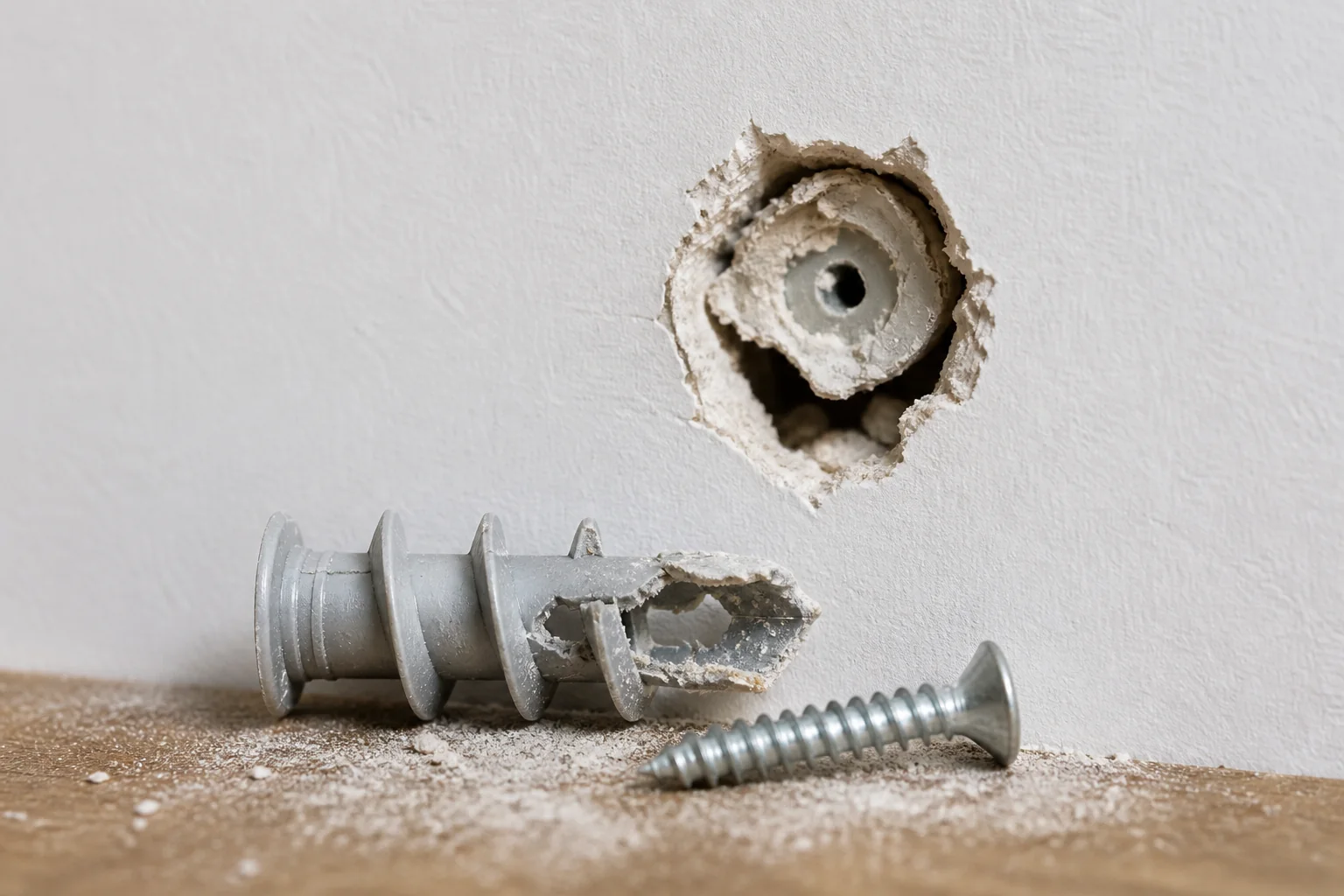
Why it happens
The pilot hole may be oversized, the screw may be the wrong diameter, the anchor may be rotating before its wings engage, or the drywall paper and gypsum may already be crushed. Repeated tightening rarely restores damaged material.
- Oversized or ragged pilot hole
- Wrong screw for the supplied anchor
- Anchor installed in damaged drywall
- Cavity too shallow for the anchor
- Fastener was overtightened
A controlled repair
Take the object down, remove or push the failed anchor into the cavity if appropriate, and inspect the surrounding face paper. Patch cosmetic holes according to the patch product instructions. For a load-bearing remount, move to sound material with the spacing allowed by the bracket, attach to framing, or use a specifically approved larger anchor in an undamaged location.
What not to do
Do not pack a load-bearing hole with toothpicks, paper, glue or random filler and assume the original rating returns. Those tricks are not substitutes for sound base material and a compatible fastener.
Diagnose the movement before removing anything
Watch the relationship between the screw, anchor and wall while applying only light hand pressure. A screw that turns while the anchor stays still may be mismatched or stripped. An anchor that rotates with the screw has lost its grip in the opening. A bracket that moves while both fasteners appear tight can indicate crushed gypsum, an uneven bracket or a second loose attachment.
Support the object before loosening hardware. Photograph the original arrangement and note the anchor type, screw size, hole location and wall condition. This record helps you avoid repeating the same combination after the failed piece is removed.
- Screw rotates but anchor does not
- Anchor and screw rotate together
- Fastener tightens but bracket still rocks
- Paper tears or gypsum powders around the hole
Choose a repair path based on sound material
For a light cosmetic item, moving the attachment a manufacturer-approved distance to intact drywall may be sufficient. For a significant load, a nearby stud or installed blocking is usually more dependable. A larger anchor is only a candidate when its instructions permit the existing opening size and the surrounding board remains intact.
The patched hole and the new mounting point are separate decisions. Finish the abandoned opening with a repair method suited to its size, but do not assume joint compound restores anchor capacity. If several holes, moisture damage or delamination overlap the bracket area, replace or professionally repair the affected panel before remounting.
- Relocate to intact material
- Use framing where the mounting instructions require it
- Use a larger listed anchor only in sound board
- Repair widespread damage before carrying a new load
Prevent a repeat failure
Use the bit specified for the exact anchor and keep it perpendicular to the wall. Do not use the rotating screw to force an unseated anchor into place. When setting a molly or toggle, follow the required sequence and hold the hardware as directed until it engages behind the wall.
Stop tightening when the bracket is secure or at the stated torque. Extra turns can crush gypsum or strip an anchor that initially installed correctly. After mounting, apply only a controlled check appropriate to the item; a person pulling on the object is not a valid load test.
Frequently asked questions
Can I glue a spinning anchor in place?
Adhesive is not a substitute for the anchor’s listed installation in sound base material. Relocate or use an approved repair strategy.
Can I reuse the same drywall hole?
Only if a specific repair or larger fastener system explicitly permits that hole and the surrounding gypsum is intact.
Why did the anchor spin before it tightened?
Common causes include an oversized hole, damaged paper, a wrong screw, insufficient cavity depth or failure to engage the setting mechanism.
A practical next step
Before buying hardware, confirm the wall assembly and read the installation instructions for both the object and the exact fastener. If you need a starting category, use our Anchor Selector.
Sources and further reading
These primary and manufacturer resources support the safety and installation principles summarized above. Always use the current instructions for your exact product.